AI-Driven CI/CD Pipelines: Why They’re Becoming the New Standard
Introduction
In recent years the convergence of artificial intelligence and DevOps has reshaped software delivery. Traditional CI/CD pipelines rely on static scripts and manual thresholds, but AI-driven pipelines add predictive analytics, automated decision making, and continuous learning to the process. This shift is not a fad; it addresses core challenges of speed, quality, and operational cost that organizations face at scale.
Core Concept
An AI-driven CI/CD pipeline embeds machine learning models into each stage of the software lifecycle. These models analyze historical build data, test results, and production metrics to recommend optimizations, detect anomalies, and even trigger rollbacks without human intervention. The core idea is to turn the pipeline from a deterministic workflow into an adaptive system that improves with every execution.
Architecture Overview
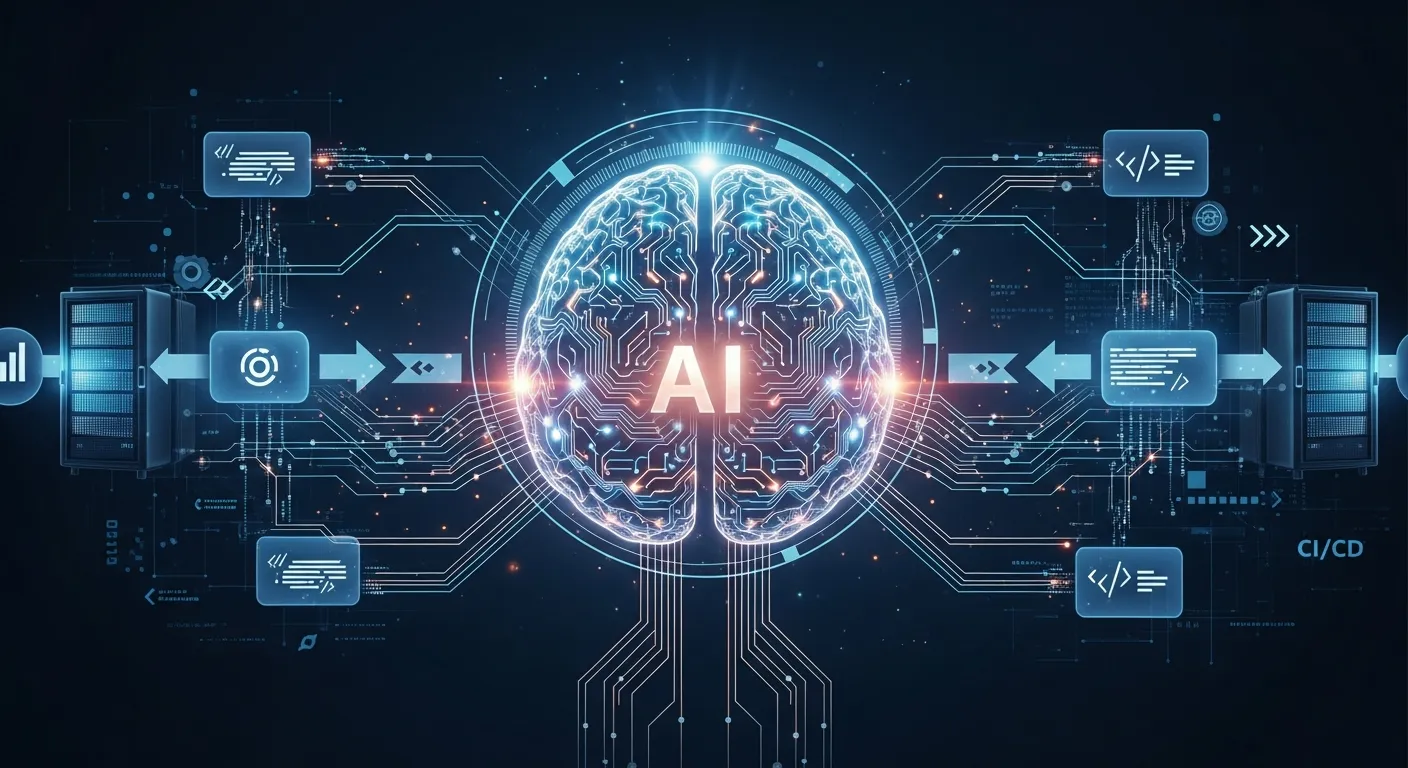
The architecture typically consists of three layers: data collection, model inference, and orchestration. Sensors and agents gather logs, performance counters, and code metrics, feeding them into a centralized data lake. Trained models run inference services that expose predictions via APIs. Finally, an orchestrator such as Jenkins, GitLab CI, or a custom workflow engine consumes those predictions to adjust build steps, allocate resources, or modify test suites in real time.
Key Components
- Data ingestion and storage
- Feature engineering pipelines
- Machine learning models for prediction and classification
- Inference API layer
- Orchestration engine with AI hooks
How It Works
When a developer pushes code, the pipeline first records the change set and context. The data ingestion layer enriches this with recent build times, flakiness rates, and code complexity scores. The inference service evaluates the change and predicts the optimal test selection, resource allocation, and risk level. The orchestrator then dynamically configures the build agents, runs the recommended test suite, and monitors execution. If a failure pattern matches a known defect, the system can auto‑rollback or open a ticket with suggested remediation steps.
Use Cases
- Dynamic test selection for large monorepos
- Predictive resource scaling in cloud‑native builds
- Automated anomaly detection during deployment
- Intelligent rollback decisions based on real‑time health metrics
Advantages
- Reduced build and test time through intelligent test pruning
- Higher release confidence thanks to data‑driven risk assessment
- Lower operational cost by auto‑scaling resources only when needed
- Continuous improvement as models learn from each pipeline execution
Limitations
- Initial effort to collect quality data and train accurate models
- Potential model drift requiring ongoing monitoring and retraining
- Increased complexity in pipeline configuration and debugging
Comparison
Compared with rule‑based pipelines, AI‑driven pipelines adapt to changing codebases and infrastructure without manual rule updates. Traditional pipelines excel in predictability but often waste resources on exhaustive testing. Hybrid approaches combine static rules for compliance with AI recommendations for efficiency, offering a balanced path for organizations transitioning gradually.
Performance Considerations
Model latency must be low enough to avoid adding noticeable overhead to each build. Edge inference or lightweight models can keep response times under a second. Data pipelines should be designed for high‑throughput ingestion to ensure real‑time feature availability. Caching predictions for similar change patterns further reduces compute load.
Security Considerations
Sensitive code and performance data must be encrypted at rest and in transit. Access to model APIs should be restricted to authorized CI/CD agents. Auditing of AI decisions is essential to satisfy compliance requirements, and model outputs should be logged for traceability and post‑mortem analysis.
Future Trends
Beyond 2026 we expect AI‑driven pipelines to integrate generative AI for automated code fixes, self‑healing deployments that rewrite failing configurations, and tighter coupling with observability platforms for end‑to‑end performance loops. Multi‑modal models that understand code, logs, and infrastructure as a single context will further blur the line between development and operations.
Conclusion
AI‑driven CI/CD pipelines are rapidly moving from experimental projects to industry standards because they solve the core pain points of speed, quality, and cost. By embedding learning directly into the delivery workflow, organizations gain a self‑optimizing system that scales with their software complexity. While adoption requires careful data strategy and governance, the long‑term payoff in faster time‑to‑market and reduced risk makes AI the natural evolution of modern DevOps.