AI-Driven Incident Response: Automating Security Playbooks
Introduction
Incident response teams face growing volumes of alerts and increasingly sophisticated attacks. Traditional manual playbooks struggle to keep pace, leading to delayed containment and higher breach costs. AI-driven incident response promises to automate the execution of security playbooks, turning raw telemetry into actionable remediation steps with minimal human intervention.
Core Concept
At its core, AI-driven incident response combines machine learning models with orchestration engines to interpret alerts, select or generate the appropriate playbook, and execute remediation actions across heterogeneous environments. The AI component learns from past incidents, predicts the most effective response, and continuously refines its recommendations.
Architecture Overview
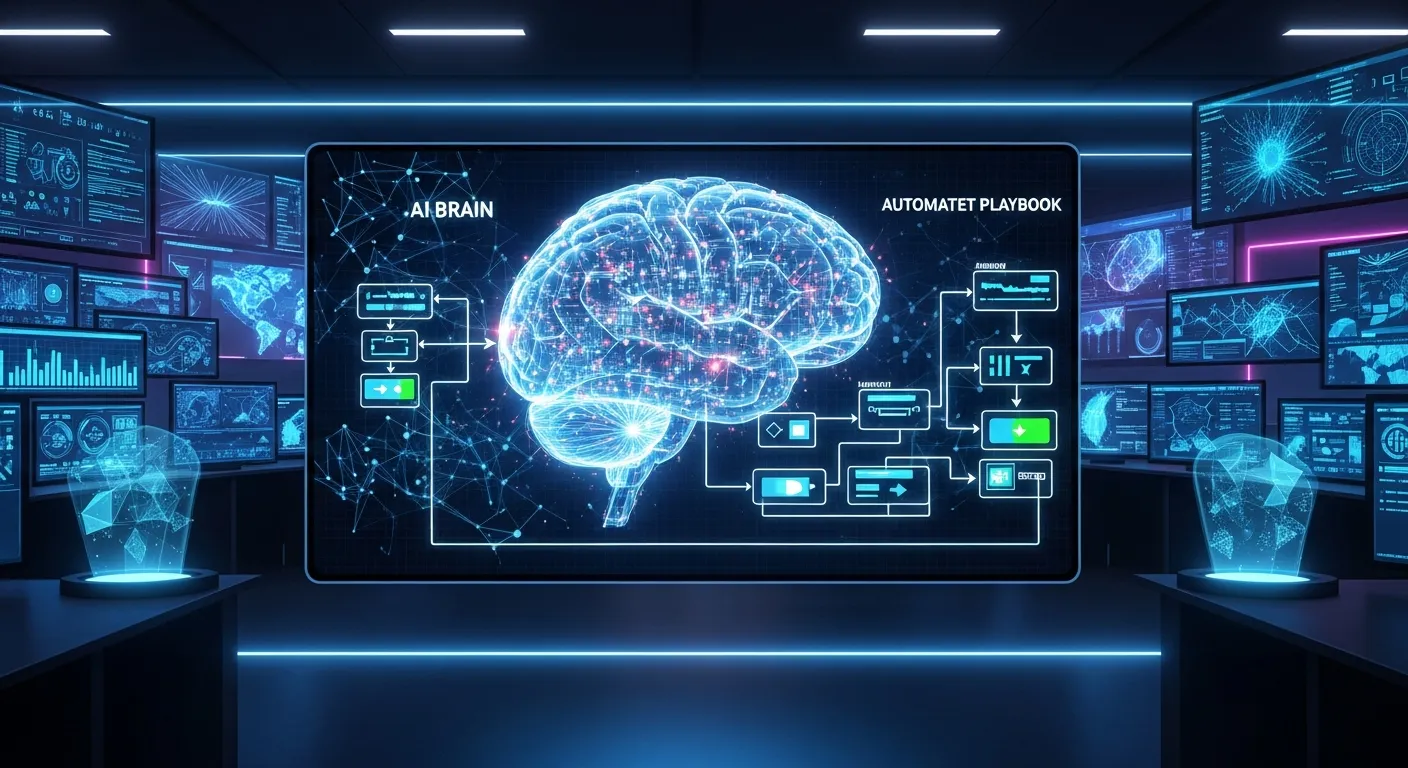
The architecture consists of an event ingestion layer, an AI inference engine, a dynamic playbook repository, an orchestration layer that interacts with security tools, and a feedback loop that feeds outcomes back into the model for continual improvement. All components communicate through secure APIs and a centralized data bus.
Key Components
- AI inference engine
- Dynamic playbook repository
- Event collector and normalizer
- Orchestration and execution layer
- Feedback and learning loop
How It Works
When a security alert arrives, the event collector normalizes the data and forwards it to the AI engine. The model evaluates the alert context, severity, and historical outcomes to rank possible response actions. It then either selects an existing playbook from the repository or generates a tailored sequence of steps. The orchestration layer translates these steps into API calls or scripts that interact with firewalls, endpoint agents, and cloud controls. After execution, the result is logged and sent back to the feedback loop, where the AI model updates its parameters.
Use Cases
- Phishing email containment by automatically isolating compromised accounts and revoking malicious URLs
- Ransomware lateral movement shutdown through network segmentation and endpoint quarantine
- Credential stuffing mitigation by throttling suspicious login attempts and enforcing MFA challenges
- Misconfiguration remediation in cloud environments by detecting policy violations and applying corrective templates
Advantages
- Near real time response reduces dwell time
- Reduced manual effort frees analysts for higher level investigations
- Consistent remediation minimizes human error
- Improved detection accuracy through continuous learning
Limitations
- Model bias risk if training data is not representative
- Dependency on high quality telemetry for accurate inference
- Complexity of integrating with legacy security tools
- Potential for over‑automation leading to unintended service impact
Comparison
Compared to traditional SOAR, AI-driven solutions add predictive analytics, dynamic playbook generation, and continuous learning, while legacy tools rely on static rules and manual playbook selection.
Performance Considerations
Inference latency must be kept below a few seconds to meet real time response goals. Scaling the AI engine horizontally and using GPU acceleration can handle high alert volumes. Caching frequently used playbooks and pre‑computing risk scores helps reduce compute overhead.
Security Considerations
All data in transit and at rest must be encrypted and access controlled. Model poisoning attacks require strict validation of training data and sandboxed model updates. Role based access ensures only authorized automation can execute high‑impact actions.
Future Trends
By 2026 generative AI will enable fully autonomous response where the system drafts custom remediation scripts on the fly. Integration with zero trust architectures will allow context aware isolation. Multi‑cloud orchestration will become standard, and AI models will be federated to protect data sovereignty while sharing threat intelligence across organizations.
Conclusion
AI-driven incident response transforms security playbooks from static documents into adaptive, automated workflows. By coupling machine learning with orchestration, organizations can detect, decide, and act faster than ever before, reducing breach impact while freeing analysts to focus on strategic defense. As models mature and integration improves, AI will become the backbone of next generation cyber resilience.