AI Model Serving on GPU Clouds with NVIDIA Triton
Introduction
Deploying deep learning models at scale requires a reliable serving layer that can handle high request rates, low latency, and diverse model formats. Traditional CPU based serving struggles to meet these demands, especially for large transformer or vision models. NVIDIA Triton Inference Server brings GPU acceleration, model‑agnostic APIs, and orchestration features that make it a natural fit for modern GPU cloud environments.
Core Concept
Triton abstracts the complexities of GPU inference by providing a unified server that loads models in TensorFlow, PyTorch, ONNX, TensorRT and custom formats, exposes them through HTTP, gRPC or GRPC‑based protocols, and manages batching, memory allocation and GPU scheduling automatically.
Architecture Overview
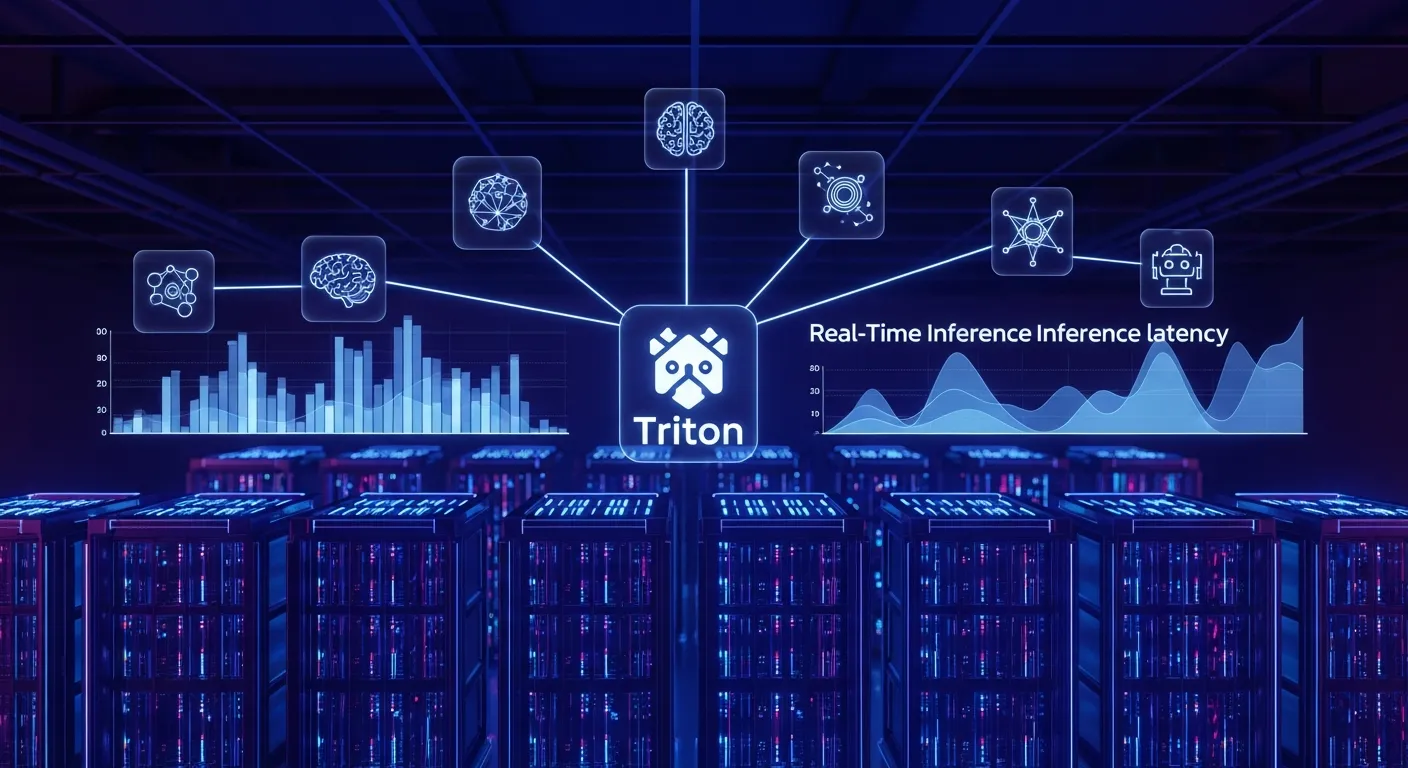
In a typical GPU cloud deployment a Triton server runs on one or more GPU‑enabled VMs or containers. Clients send inference requests to the server endpoint. Triton routes each request to the appropriate model version, applies dynamic or static batching, and dispatches the workload to the available GPU cores. The server can be scaled horizontally with a load balancer, while a model repository watches a shared storage bucket for new or updated models, enabling continuous deployment without downtime.
Key Components
- Model Repository
- Inference Server
- GPU Scheduler
- Batching Engine
- Metrics Exporter
- Security Layer
How It Works
When a request arrives, Triton parses the payload, selects the target model based on the URL or request metadata, and adds the request to a batch queue. The batching engine groups compatible requests until a size or timeout threshold is met. The batched tensor is then transferred to GPU memory, where the selected runtime (TensorRT, PyTorch, TensorFlow) executes the inference kernel. Results are collected, de‑batched, and returned to the client. Throughout this flow Triton records latency, throughput and GPU utilization metrics that can be scraped by Prometheus or visualized in Grafana.
Use Cases
- Real‑time recommendation engines serving personalized content
- Batch video analytics pipelines processing thousands of frames per second
- Large language model inference for chatbots and code assistants
- Edge AI services that require low‑latency inference on cloud‑connected devices
Advantages
- GPU acceleration with automatic device selection
- Support for multiple frameworks and model formats
- Dynamic batching reduces per‑request overhead
- Built‑in model versioning and hot reload
- Extensive observability via Prometheus and TensorBoard
- Scalable across single node, multi‑node and Kubernetes clusters
Limitations
- Initial setup complexity for on‑prem GPU clusters
- Higher cost per inference compared with CPU‑only serving
- Limited support for custom hardware beyond NVIDIA GPUs
- Steeper learning curve for advanced features like model ensembles
Comparison
Compared with alternatives such as TensorFlow Serving or TorchServe, Triton offers broader framework coverage, native TensorRT integration for maximum performance, and out‑of‑the‑box support for GPU batching. However, pure CPU serving frameworks may be simpler to deploy for low‑traffic workloads where GPU cost outweighs latency benefits.
Performance Considerations
Key factors include GPU memory footprint, batch size, model precision (FP16 vs INT8), and network latency between client and server. Using TensorRT‑optimized models can double throughput, while enabling async execution and pipeline parallelism further reduces tail latency. Monitoring GPU utilization helps identify bottlenecks and informs autoscaling policies.
Security Considerations
Triton can be secured with TLS termination at the ingress layer, token‑based authentication, and role‑based access control for model repositories. Sensitive data should be encrypted in transit and at rest, and inference logs must be sanitized to avoid leaking proprietary model details.
Future Trends
By 2026 the convergence of LLM serving and multi‑modal inference will drive tighter integration between Triton and emerging NVIDIA Hopper GPUs. Expect native support for pipeline parallelism across multiple GPUs, serverless inference endpoints that auto‑scale to zero, and deeper integration with AI‑ops platforms for continuous model validation and drift detection.
Conclusion
NVIDIA Triton transforms GPU cloud resources into a high‑performance, flexible serving platform that meets the demanding latency and throughput requirements of modern AI applications. By leveraging its unified APIs, automatic batching and robust observability, organizations can accelerate model deployment, reduce operational overhead, and stay competitive in the fast‑moving AI landscape.