Container Runtime Security: Essential Best Practices for 2026
Introduction
Containers have become the de facto unit of deployment for modern applications, but their speed and flexibility also introduce new attack surfaces. Understanding how to secure the container runtime is critical for protecting workloads, data, and the underlying host infrastructure.
Core Concept
Container runtime security focuses on protecting the execution environment of a container after it has been scheduled, ensuring that the image, the host, and the orchestration layer cannot be compromised during runtime.
Architecture Overview
A typical container stack includes the image registry, the build pipeline, the container engine (Docker, containerd, CRI‑O), the orchestration platform (Kubernetes), and the host OS. Security controls must be applied at each layer, with runtime enforcement acting as the final line of defense before code reaches the network.
Key Components
- Image signing and verification
- Least‑privilege runtime policies
- Seccomp and AppArmor profiles
- User namespace isolation
- Runtime threat detection agents
- Audit logging and compliance reporting
How It Works
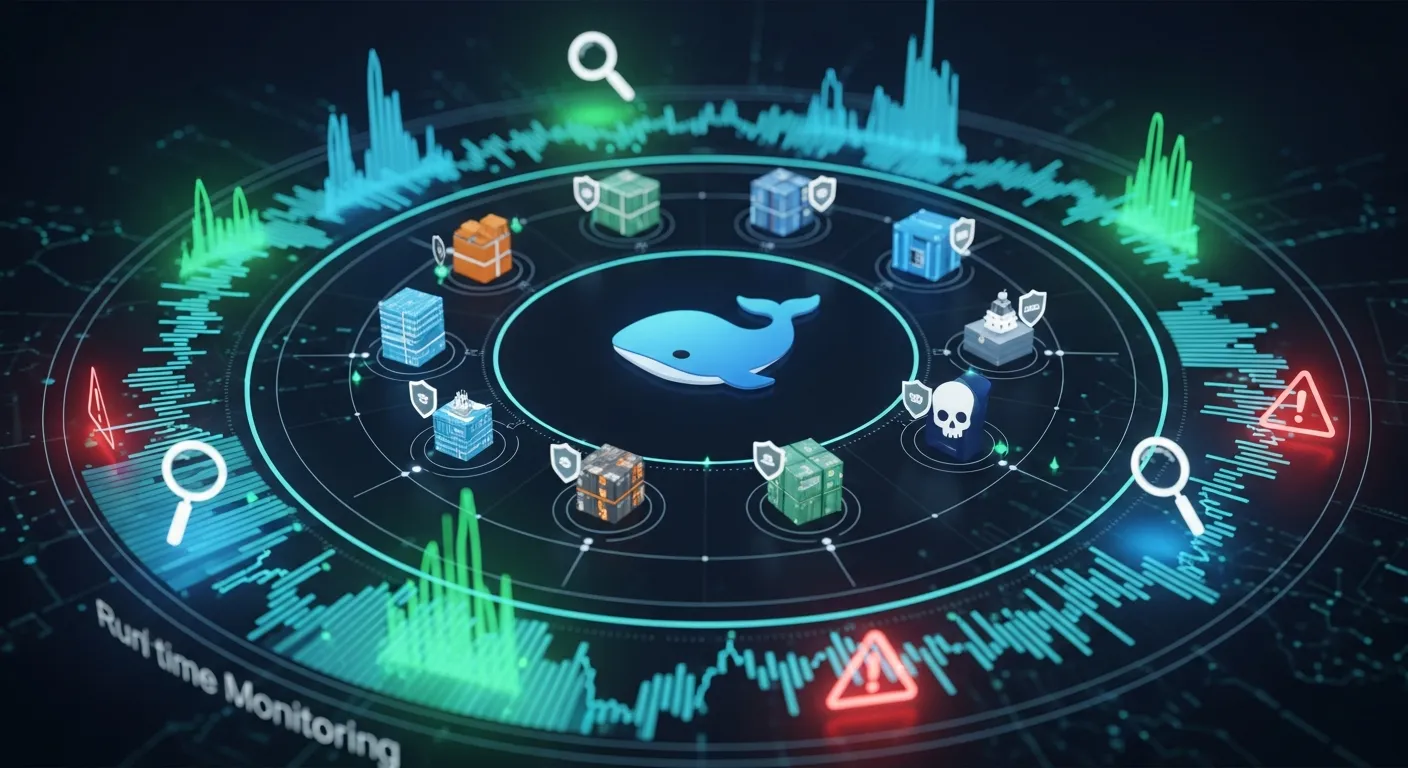
When a pod is created, the orchestrator requests an image from a trusted registry. The runtime verifies the image signature, applies a predefined security profile, and launches the container in a user namespace with restricted capabilities. A lightweight agent continuously monitors system calls, network traffic, and file integrity, raising alerts or automatically quarantining suspicious containers. All events are streamed to a central audit store for forensic analysis.
Use Cases
- Zero‑trust microservices in regulated industries
- Multi‑tenant SaaS platforms requiring strict isolation
- DevSecOps pipelines that enforce image provenance at build and runtime
Advantages
- Reduces risk of privilege escalation attacks
- Provides real‑time visibility into container behavior
- Enables compliance with standards such as CIS Benchmarks and NIST
Limitations
- Performance overhead from deep syscall inspection
- Complexity of policy management in large clusters
- Potential false positives requiring tuning of detection rules
Comparison
Traditional host‑based security tools focus on the operating system and lack visibility into container‑specific events. Runtime security platforms extend those controls with container‑aware policies, offering finer granularity than network firewalls and complementing image scanning tools that only operate at build time.
Performance Considerations
Modern eBPF‑based agents can capture kernel events with minimal latency, typically adding less than 2% CPU overhead. However, enabling full syscall logging or aggressive file integrity checks can increase resource consumption, so organizations should benchmark policies in staging environments before wide deployment.
Security Considerations
Key considerations include establishing a trusted root of authority for image signing, regularly rotating runtime secrets, limiting container capabilities to the minimum required, and integrating runtime alerts with a Security Orchestration, Automation and Response (SOAR) platform for rapid remediation.
Future Trends
By 2026, AI‑driven anomaly detection will augment rule‑based engines, automatically adapting policies to evolving workloads. Serverless container runtimes will introduce new isolation primitives, and standards such as the Open Container Initiative (OCI) Runtime Specification will evolve to embed security hooks directly into the runtime lifecycle.
Conclusion
Securing the container runtime is no longer optional—it is a foundational element of any robust cloud‑native strategy. By combining image integrity, least‑privilege execution, continuous monitoring, and automated response, organizations can defend against the most common container attacks while maintaining the agility that containers provide.