Edge AI Revolution: Real-Time Data Processing Unleashed
Introduction
Edge AI is reshaping how organizations handle streaming data by moving intelligence closer to the source. This shift enables immediate analysis, faster reactions, and reduced reliance on distant cloud resources.
Core Concept
Edge AI combines artificial intelligence models with edge computing hardware to perform inference directly on devices at the network perimeter, eliminating the need to send raw data to centralized servers for processing.
Architecture Overview
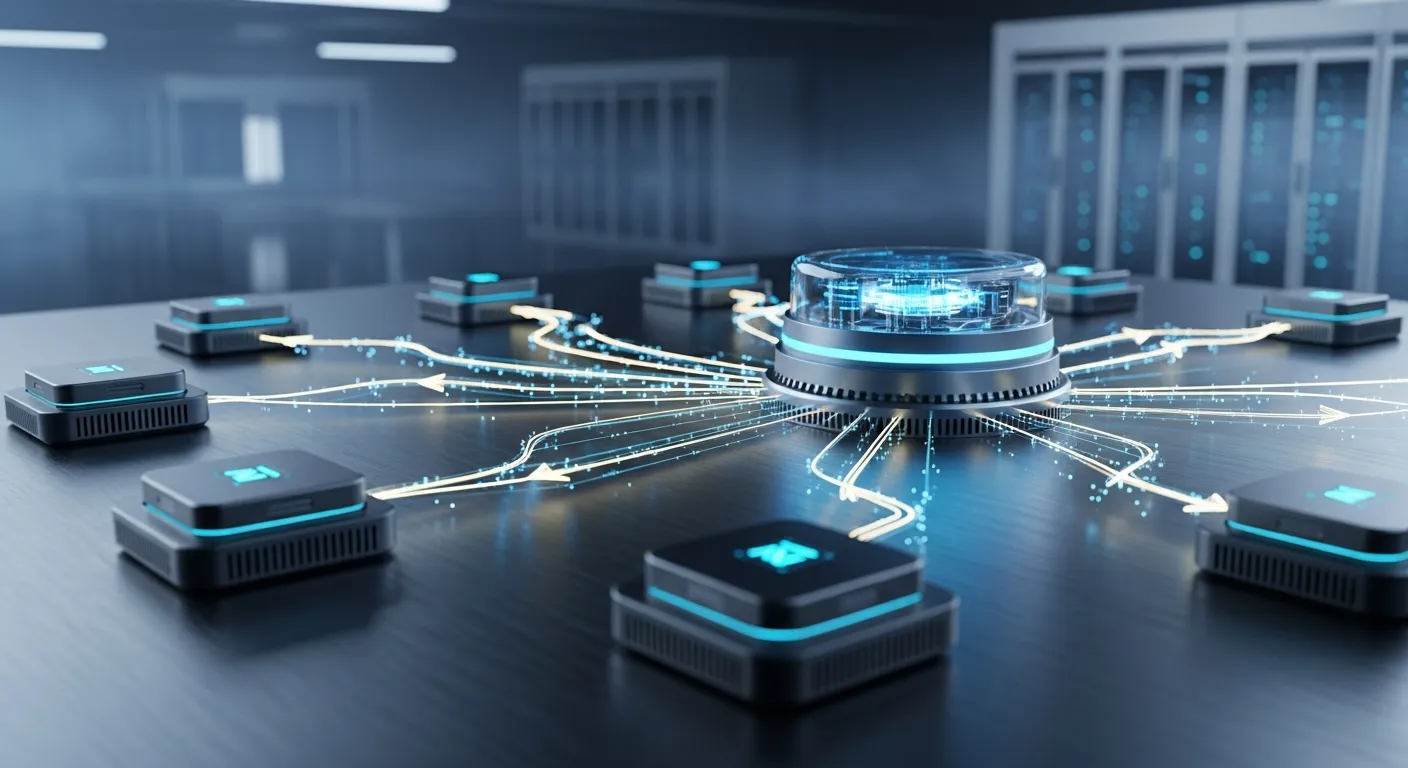
A typical Edge AI architecture consists of data acquisition sensors, a lightweight AI inference engine, local storage, connectivity modules, and a management layer that orchestrates model updates and monitors performance across distributed nodes.
Key Components
- AI inference engine
- Edge device hardware
- Data ingestion layer
- Connectivity module
- Management and orchestration platform
How It Works
Sensors capture raw data which is pre‑processed on the edge device. The AI inference engine runs a compact model to generate predictions or classifications. Results are acted upon locally or sent upstream for aggregation, while model parameters are periodically refreshed from the cloud using secure OTA updates.
Use Cases
- Autonomous vehicle perception and control
- Industrial IoT predictive maintenance
- Smart retail video analytics
- Augmented reality streaming
- Healthcare remote patient monitoring
Advantages
- Microsecond latency reduction
- Bandwidth savings by filtering data at source
- Enhanced privacy through on‑device processing
- Scalable AI deployment across heterogeneous sites
- Context‑aware decision making with local data
Limitations
- Limited compute resources compared to data centers
- Power constraints on battery‑operated devices
- Complexity of updating models across many nodes
- Expanded security surface due to distributed endpoints
- Hardware heterogeneity complicates software portability
Comparison
Unlike traditional cloud AI, Edge AI processes data locally, offering lower latency and higher privacy but at the cost of reduced model complexity. Cloud AI provides massive compute power and easier model management, while Edge AI excels in real‑time responsiveness and bandwidth efficiency.
Performance Considerations
Key metrics include end‑to‑end latency, inference throughput, model size, and energy consumption. Selecting quantized or pruned models, leveraging specialized AI accelerators, and optimizing data pipelines are essential to meet strict real‑time requirements.
Security Considerations
Edge deployments must address device authentication, secure boot, encrypted data in transit and at rest, and runtime integrity monitoring. Federated learning can reduce exposure of raw data while keeping models up to date across devices.
Future Trends
By 2026 Edge AI will benefit from TinyML 2.0, widespread 5G/6G connectivity, on‑device federated learning, and next‑generation AI chips that deliver higher performance per watt. Integrated AI pipelines will enable autonomous decision loops across smart cities and industrial ecosystems.
Conclusion
Edge AI is a catalyst for real‑time data processing, delivering speed, privacy, and cost efficiency that traditional cloud models cannot match. As hardware advances and standards mature, organizations that adopt Edge AI will unlock new capabilities and stay competitive in increasingly data‑driven markets.