GitOps Workflows: Boosting Modern DevOps Pipelines
Introduction
In today’s fast‑moving software landscape teams need a reliable way to deliver code changes while keeping infrastructure consistent. GitOps brings a declarative, Git‑centric approach that aligns version control with operational processes, enabling smoother, repeatable deployments across cloud native environments.
Core Concept
The core idea of GitOps is to treat a Git repository as the single source of truth for both application code and the desired state of infrastructure. Any change to the system is made through a pull request, reviewed, and merged, after which automated agents reconcile the live environment to match the repository.
Architecture Overview
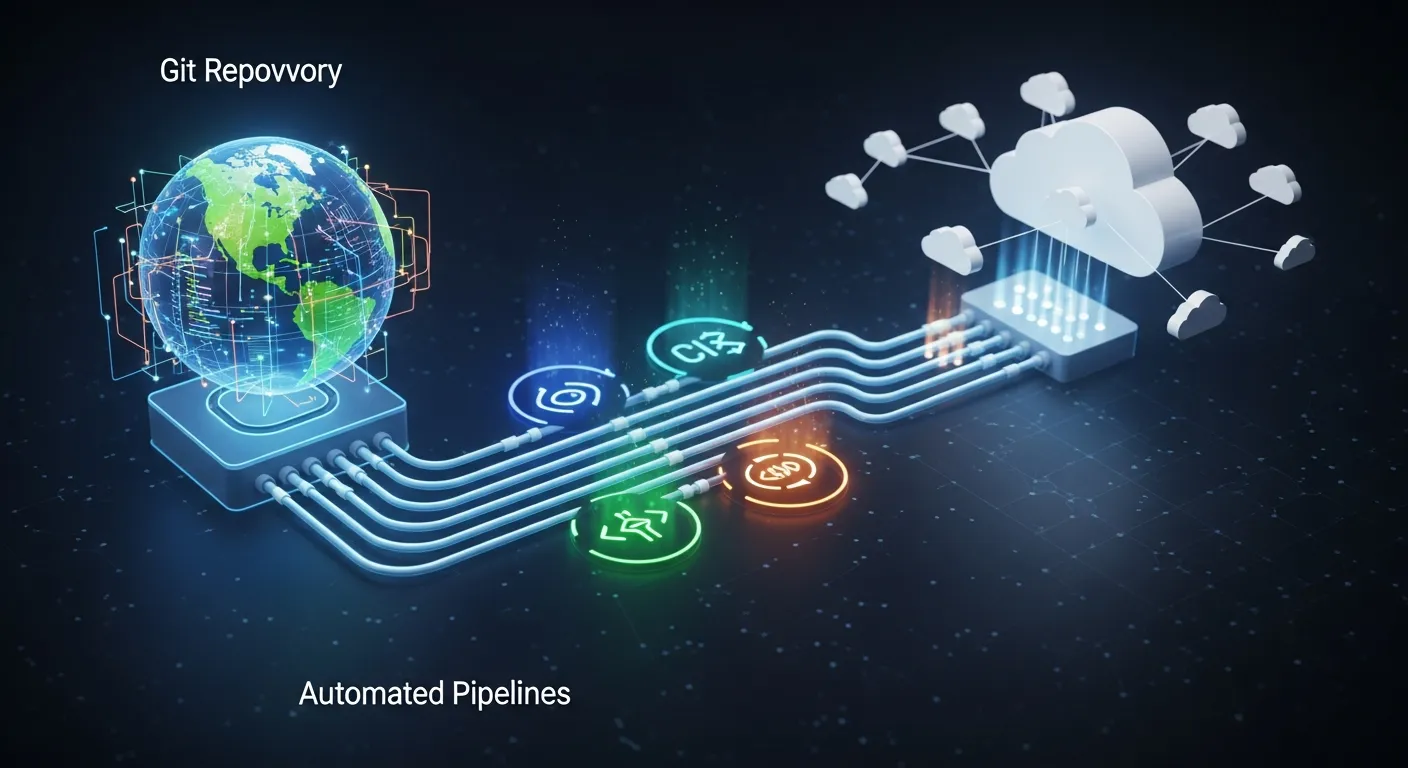
A typical GitOps architecture consists of a Git server, a continuous integration pipeline that builds artifacts, and one or more operators that monitor the repository and apply changes to the target clusters. The feedback loop includes observability tools that report drift and health status back to developers.
Key Components
- Git repository as source of truth
- CI pipeline for image build and test
- GitOps operator (Argo CD, Flux)
- Kubernetes or other declarative platform
- Observability and drift detection
How It Works
Developers push code to a feature branch, the CI system builds a container image, stores it in a registry, and updates the manifest file in the GitOps repo. The operator detects the commit, pulls the new manifest, and applies it to the cluster. If the live state diverges, the operator reverts it to match the repo, ensuring continuous convergence.
Use Cases
- Continuous delivery for microservice architectures
- Infrastructure provisioning with Terraform or Pulumi stored in Git
- Multi‑cluster management across environments
- Compliance enforcement by locking configuration in Git
Advantages
- Auditable changes through Git history
- Reduced manual drift and configuration errors
- Faster rollbacks by reverting commits
- Improved collaboration via pull‑request workflows
Limitations
- Operator learning curve for teams new to declarative tooling
- Potential latency between commit and cluster reconciliation
- Complexity when managing large monorepos with many services
Comparison
Traditional CI/CD pipelines often rely on scripted deployments that execute imperatively, making it harder to track the exact state of the system. GitOps replaces scripts with declarative manifests and continuous reconciliation, offering stronger version control, easier rollbacks, and clearer audit trails compared to classic push‑based approaches.
Performance Considerations
Operator sync intervals, repository size, and network latency affect how quickly changes propagate. Tuning the reconciliation frequency and using shallow clones can improve responsiveness without overloading the API server.
Security Considerations
Storing secrets in Git requires encryption tools such as Sealed Secrets or SOPS. Role‑based access control on the repository and the operator ensures only authorized users can modify production state. Auditing pull‑request approvals adds an extra compliance layer.
Future Trends
By 2026 GitOps is expected to expand beyond Kubernetes into serverless and edge computing platforms. Integration with AI‑driven policy engines will automate compliance checks, while tighter coupling with observability stacks will enable self‑healing loops that adjust configurations autonomously.
Conclusion
GitOps reshapes DevOps pipelines by unifying code and operations under a single versioned workflow. Its declarative nature, auditability, and automated reconciliation make it a compelling choice for modern cloud native teams seeking speed, reliability, and compliance in continuous delivery.