How GitOps Boosts Continuous Delivery Efficiency
Introduction
In modern software delivery, speed and reliability are no longer optional. Teams that can push changes quickly while maintaining stability gain a competitive edge. GitOps, a declarative approach that treats Git repositories as the single source of truth for both code and infrastructure, has emerged as a powerful way to streamline continuous delivery pipelines.
Core Concept
GitOps combines version-controlled configuration, automated reconciliation, and observable pipelines. By storing desired state in Git and letting operators continuously align the live environment with that state, the system reduces manual steps and drift.
Architecture Overview
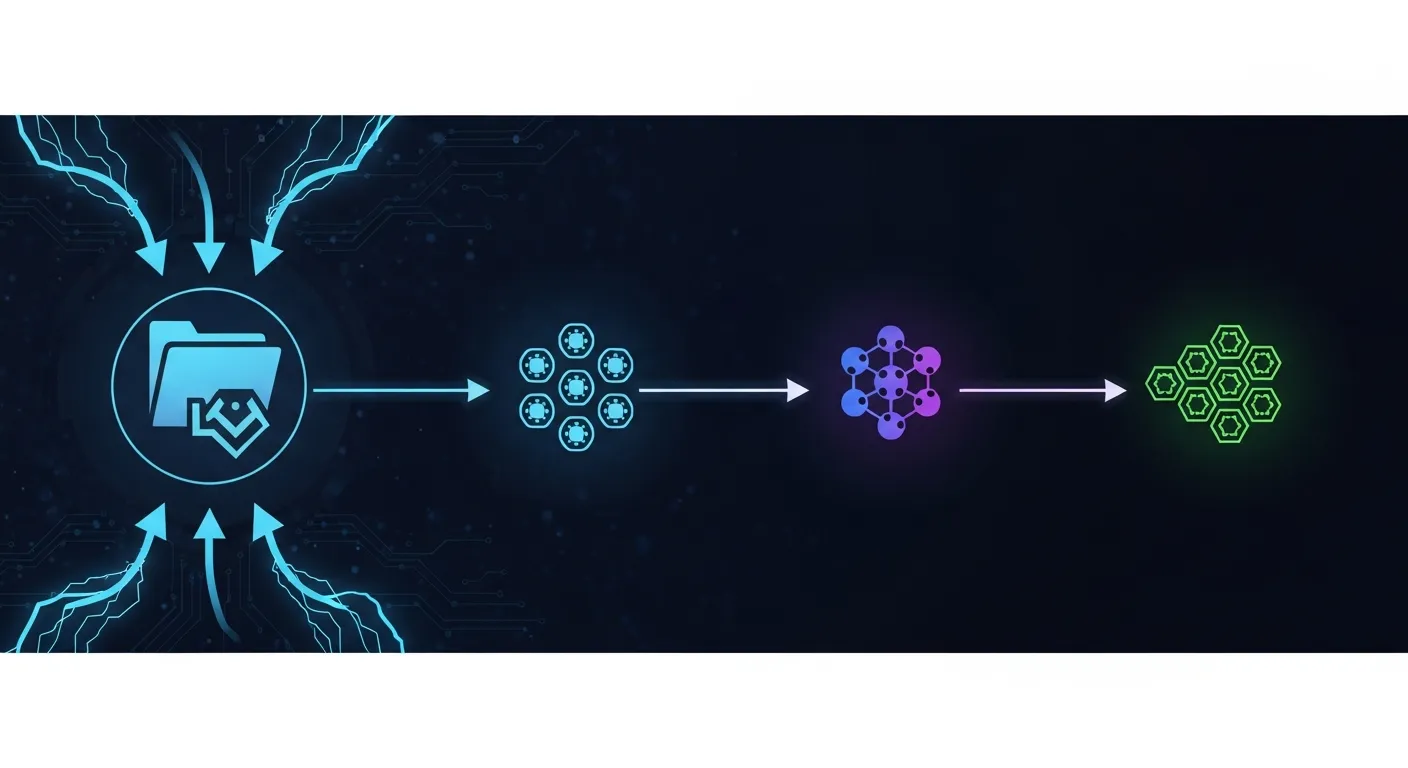
A typical GitOps stack consists of a Git repository that holds application manifests, a CI system that builds container images, and a CD engine that watches the repo and applies changes to a Kubernetes cluster. The CD engine runs a reconciliation loop, compares the declared state with the actual cluster state, and issues corrective actions through the cluster API.
Key Components
- Git repository as source of truth
- CI pipeline for image build and test
- GitOps operator (Argo CD, Flux)
- Kubernetes cluster
- Observability stack (Prometheus, Grafana)
How It Works
Developers push code changes to a feature branch, the CI pipeline builds an image, runs tests, and tags the image. The pipeline then updates the manifest file in the GitOps repo with the new image tag and creates a pull request. After review and merge, the GitOps operator detects the change, computes the diff, and applies the updated manifest to the target cluster, automatically rolling out the new version.
Use Cases
- Microservice updates across multiple clusters
- Infrastructure provisioning with Terraform and GitOps
- Canary releases and progressive rollouts
- Disaster recovery via declarative state restoration
Advantages
- Single source of truth eliminates configuration drift
- Automated reconciliation reduces manual errors
- Fast feedback loops accelerate release cycles
- Auditable change history simplifies compliance
- Scalable across many clusters and environments
Limitations
- Initial setup complexity can be steep
- Operator performance may lag in very large clusters
- Requires mature Git workflow discipline
- Limited to platforms that support declarative APIs
Comparison
Compared with traditional scripted CD, GitOps offers declarative intent, built-in versioning, and continuous self-healing. Unlike pure CI-only pipelines, GitOps extends automation to the deployment and runtime phases, providing tighter control and observability.
Performance Considerations
Reconciliation frequency, manifest size, and cluster API latency directly affect rollout speed. Tuning the sync interval, using shallow clones, and partitioning large clusters into smaller logical groups can keep latency under a few seconds.
Security Considerations
Storing secrets in Git is avoided by integrating secret managers such as Vault or Sealed Secrets. Role-based access control on the Git repo and the GitOps operator ensures that only authorized changes reach production. Audit logs from both Git and the operator provide end-to-end traceability.
Future Trends
By 2026 GitOps is expected to expand beyond Kubernetes into serverless and edge compute platforms. AI-driven policy engines will automatically suggest optimal sync intervals and detect drift patterns. Integration with multi-cloud governance tools will make GitOps the universal control plane for all cloud resources.
Conclusion
GitOps reshapes continuous delivery by turning Git into the operational backbone of modern applications. Its declarative nature, automated reconciliation, and built-in auditability deliver faster, safer releases while reducing operational overhead. Organizations that adopt GitOps today position themselves to reap efficiency gains now and stay adaptable to the evolving cloud landscape.