How Serverless Functions Cut Backend Maintenance Costs
Introduction
Modern applications demand rapid iteration and reliable uptime, yet traditional backend servers require constant patching, capacity planning, and hardware monitoring, draining time and budget.
Core Concept
Serverless functions are short lived pieces of code that run on demand in a fully managed environment, charging only for actual execution time and abstracting all server management tasks.
Architecture Overview
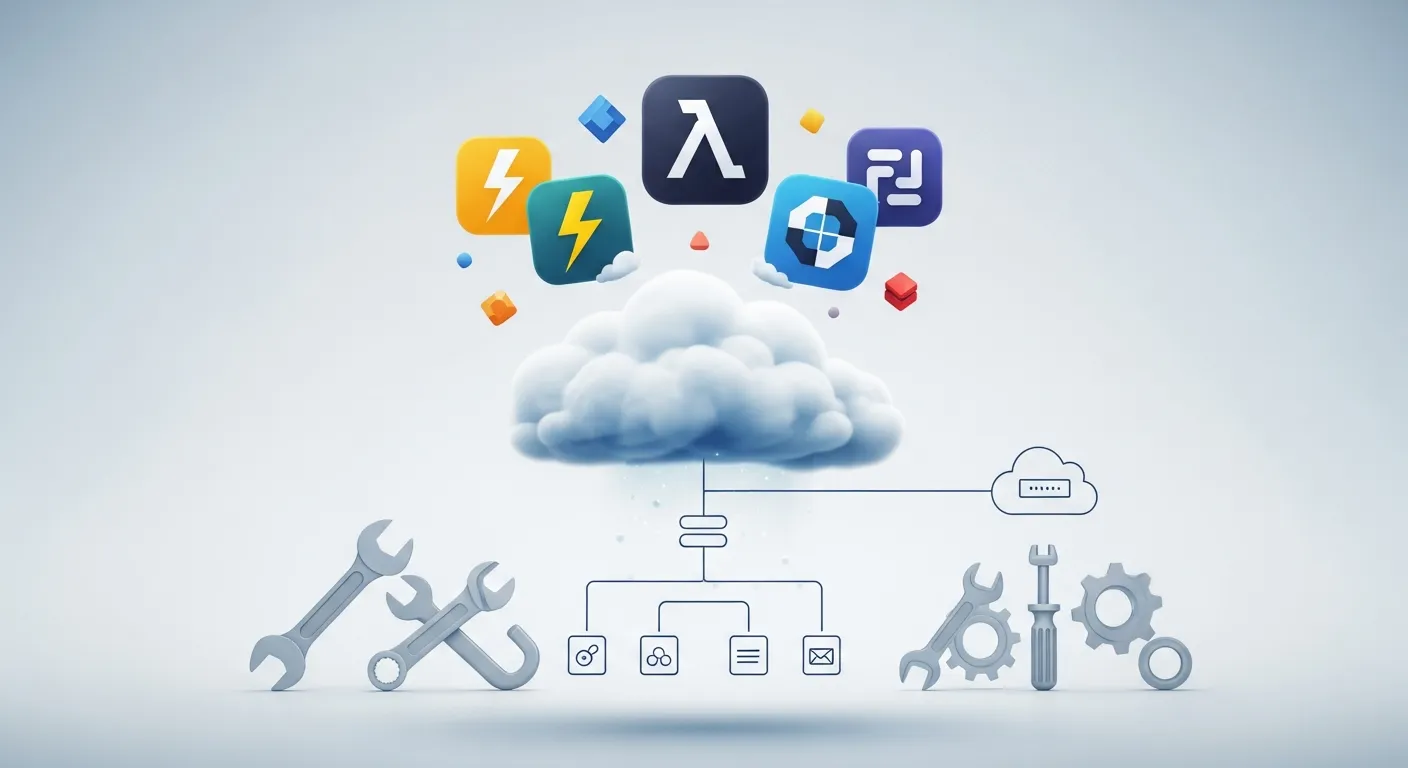
In a serverless architecture the function code is stored in a Function as a Service platform, triggered by events such as HTTP requests, message queues, or file uploads, while the provider handles runtime provisioning, scaling, and health monitoring.
Key Components
- Function as a Service
- API Gateway
- Event Sources
- Managed Identity
- Monitoring and Logging
How It Works
When an event occurs the platform provisions a lightweight container, loads the function code, executes it, returns the response, and then tears down the container, all without developer intervention.
Use Cases
- Image processing on upload
- Real time data validation for API requests
Advantages
- Zero server provisioning effort
- Automatic scaling to zero and peak loads
- Pay‑per‑use pricing model
- Faster time to market with built in integrations
- Reduced operational overhead for updates and patches
Limitations
- Cold start latency for infrequently used functions
- Limited execution duration and memory per invocation
- Vendor lock‑in to specific runtime environments
Comparison
Compared with traditional VMs or containers, serverless eliminates the need for OS maintenance, capacity planning and load balancer configuration, while offering finer granularity of billing and instant scaling, though it sacrifices some control over the underlying environment.
Performance Considerations
Cold start times can be mitigated with provisioned concurrency, while high throughput workloads benefit from parallel invocations; developers should design stateless functions and keep payloads small to maximize responsiveness.
Security Considerations
Each function runs in an isolated sandbox, but proper IAM policies, least‑privilege roles, and secret management are essential to protect data and prevent privilege escalation across functions.
Future Trends
By 2026 serverless platforms will support richer language runtimes, integrated AI inference, and edge deployment models that bring functions closer to users, further reducing latency and expanding use cases beyond web backends.
Conclusion
Serverless functions shift the operational burden from developers to the cloud provider, delivering cost efficiency, automatic scaling, and simplified maintenance, making them a compelling choice for modern backend architectures.