
Real-Time Threat Detection with Falco in Cloud Environments
Introduction
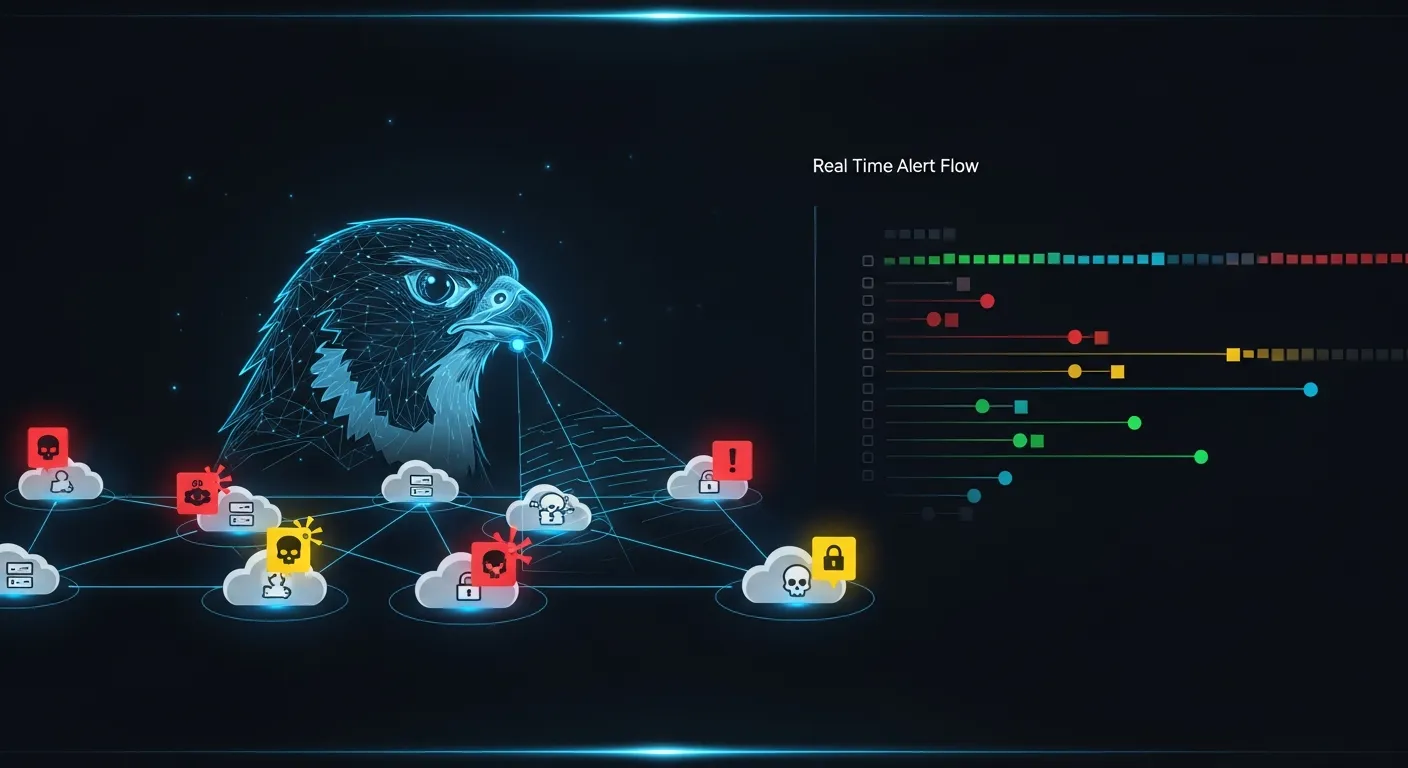
As cloud workloads grow in complexity, organizations need instant visibility into malicious activity. Falco, an open source runtime security tool, offers real‑time threat detection by monitoring system calls and container events, making it a natural fit for modern cloud environments.
Core Concept
Falco works by capturing low‑level Linux syscalls, evaluating them against a flexible rule set, and generating alerts when suspicious patterns emerge. This approach enables detection of attacks that bypass traditional network or host‑based defenses.
Architecture Overview
The Falco architecture consists of a lightweight syscall capture layer, an engine that parses events, a configurable rules engine, and multiple output sinks. In cloud platforms, Falco can run as a DaemonSet on Kubernetes nodes, as a sidecar container, or as a host‑level agent on virtual machines.
Key Components
- Falco Engine
- Ruleset
- Kubernetes Integration
- Syscall Capture Layer
- Output Sinks
How It Works
When a node boots, Falco loads eBPF or kernel modules to intercept syscalls. Each event is enriched with metadata such as container ID, pod name, and user identity. The engine evaluates the event against user‑defined rules written in a simple DSL. If a rule matches, Falco emits an alert to configured destinations like stdout, Kafka, or a SIEM.
Use Cases
- Detect container escape attempts
- Monitor unauthorized privileged operations
- Identify anomalous network activity
Advantages
- Zero‑trust detection at the kernel level without requiring agents inside each container
- Highly extensible rule language that adapts to evolving threat vectors
Limitations
- Performance impact can increase on high‑throughput workloads if rules are overly complex
- Limited native support for Windows workloads, focusing primarily on Linux
Comparison
Compared to traditional IDS solutions, Falco provides deeper visibility into container runtime behavior and integrates natively with Kubernetes. While tools like Sysdig Secure or Aqua Trivy add image scanning capabilities, Falco excels at detecting live attacks that occur after deployment.
Performance Considerations
Deploy Falco with eBPF for minimal overhead, tune rule granularity, and use selective event filtering to reduce CPU consumption. Benchmarking in a production cluster shows typical overhead below 5 percent when rules are optimized.
Security Considerations
Secure Falco configuration files, rotate output credentials, and enforce least‑privilege access for alert destinations. Regularly audit rule sets to avoid false positives that could mask real threats.
Future Trends
By 2026, Falco is expected to integrate AI‑driven anomaly detection, support multi‑cloud telemetry standards, and provide deeper observability for serverless functions, expanding its reach beyond containers and VMs.
Conclusion
Falco delivers a powerful, open source solution for real‑time threat detection in cloud environments. By leveraging kernel‑level visibility, flexible rules, and seamless Kubernetes integration, organizations can quickly identify and respond to attacks, while staying prepared for emerging security challenges.