Secure CI/CD Pipelines 2026: Best Practices for DevOps Teams
Introduction
Continuous integration and continuous delivery have become the backbone of modern software delivery, but the speed they enable also expands the attack surface. In 2026 organizations must embed security into every stage of the pipeline to prevent breaches, compliance failures, and costly rollbacks.
Core Concept
A secure CI/CD pipeline treats the delivery workflow as a trusted, verifiable path from source code to production, applying automated checks, immutable artifacts, and strict access controls at each gate.
Architecture Overview
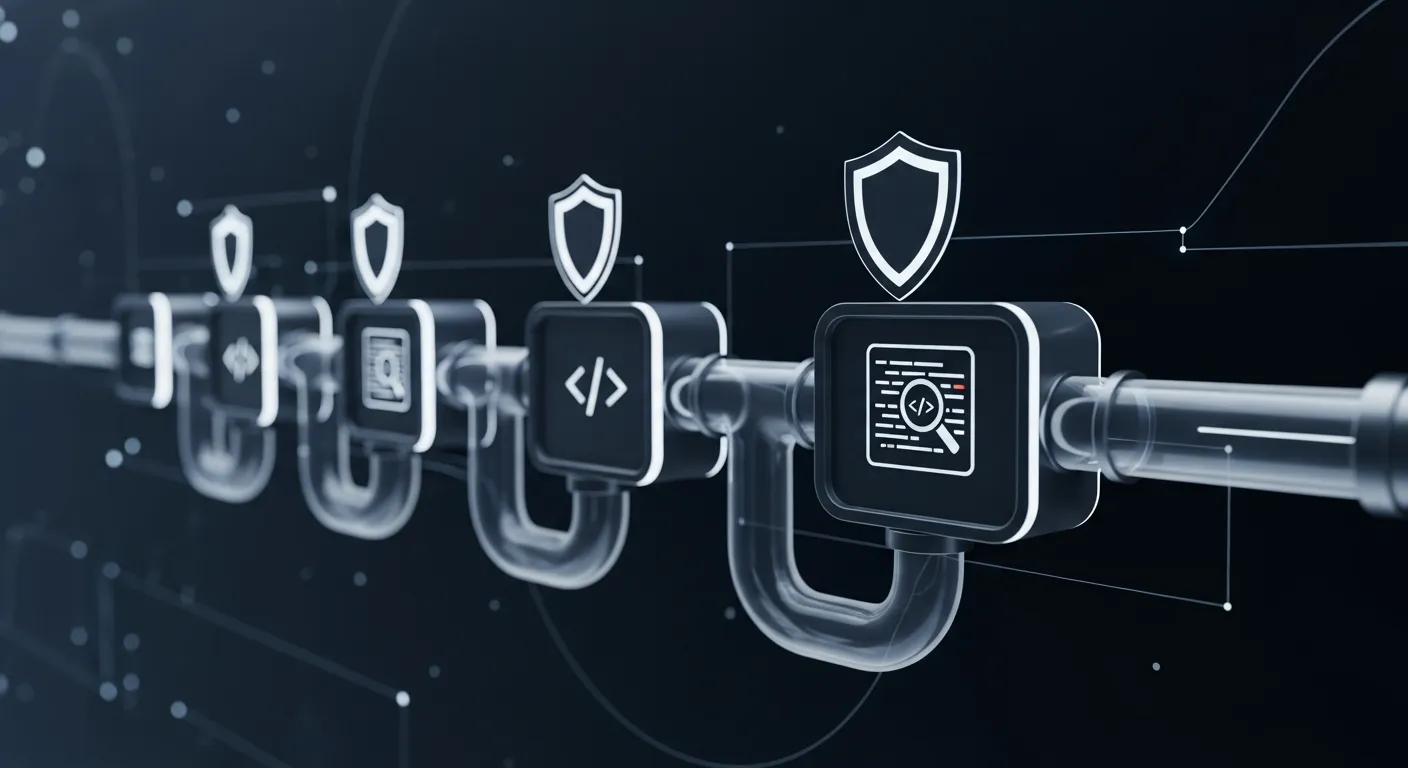
The modern secure pipeline consists of a source repository, build engine, artifact repository, deployment orchestrator, and monitoring layer. Each component is isolated, communicates over mutual TLS, and logs every action to an immutable audit store.
Key Components
- Source code management with signed commits
- Automated secret detection and policy enforcement
- Container image scanning and provenance tracking
- Infrastructure as code validation and drift detection
- Zero‑trust runtime verification
- Continuous compliance reporting
How It Works
Developers push signed commits to a protected repository. A webhook triggers a build job that runs static analysis, dependency checking, and secret scanning. The resulting artifacts are signed with a hardware security module and stored in an immutable registry. Deployment pipelines retrieve only signed artifacts, verify provenance, and apply policy‑driven approvals before provisioning infrastructure via declarative IaC tools. Throughout execution, runtime agents enforce zero‑trust policies and stream telemetry to a security operations center.
Use Cases
- Enterprise SaaS providers delivering multi‑tenant updates
- Financial institutions requiring PCI‑DSS compliance for every release
- IoT firmware pipelines where device integrity must be provable
Advantages
- Reduces human error by automating security checks
- Provides immutable evidence for audits and incident response
- Enables faster release cycles without sacrificing compliance
Limitations
- Initial setup complexity can be high for legacy environments
- Toolchain integration may require custom adapters
Comparison
Compared with traditional ad‑hoc security reviews, a secure CI/CD pipeline offers continuous assurance, lower mean time to detection, and repeatable compliance. Manual gate reviews are slower, error‑prone, and do not scale with microservice architectures.
Performance Considerations
Automated scans add latency; organizations balance depth of analysis with parallel execution. Caching of scan results for unchanged dependencies and using lightweight SBOM generation keep pipeline throughput high while maintaining security guarantees.
Security Considerations
Key threats include compromised build agents, malicious pull requests, and credential leakage. Mitigations involve using isolated build containers, enforcing least‑privilege service accounts, rotating secrets via vault integrations, and applying runtime attestation of every artifact.
Future Trends
By 2026 AI‑driven threat modeling will augment pipeline scans, predicting vulnerable code patterns before they are merged. Supply chain security will rely on decentralized attestations using blockchain‑based provenance, and edge‑native pipelines will bring security checks closer to device firmware generation.
Conclusion
Securing CI/CD pipelines is no longer optional; it is a competitive necessity. By adopting signed commits, automated secret detection, immutable artifacts, zero‑trust runtime enforcement, and continuous compliance reporting, teams can accelerate delivery while protecting their most valuable asset – code.