Serverless Computing 2026: Evolution and Future Trends
Introduction
Serverless computing, once a niche for event driven workloads, has become the default deployment model for many enterprises in 2026. The shift from managing servers to focusing on business logic has accelerated innovation, reduced operational overhead, and opened new possibilities for rapid scaling across global edge locations.
Core Concept
At its core, serverless abstracts the underlying infrastructure so developers write functions or services without provisioning or patching servers. The platform automatically handles scaling, load balancing, and billing based on actual execution time, allowing teams to concentrate on code and outcomes.
Architecture Overview
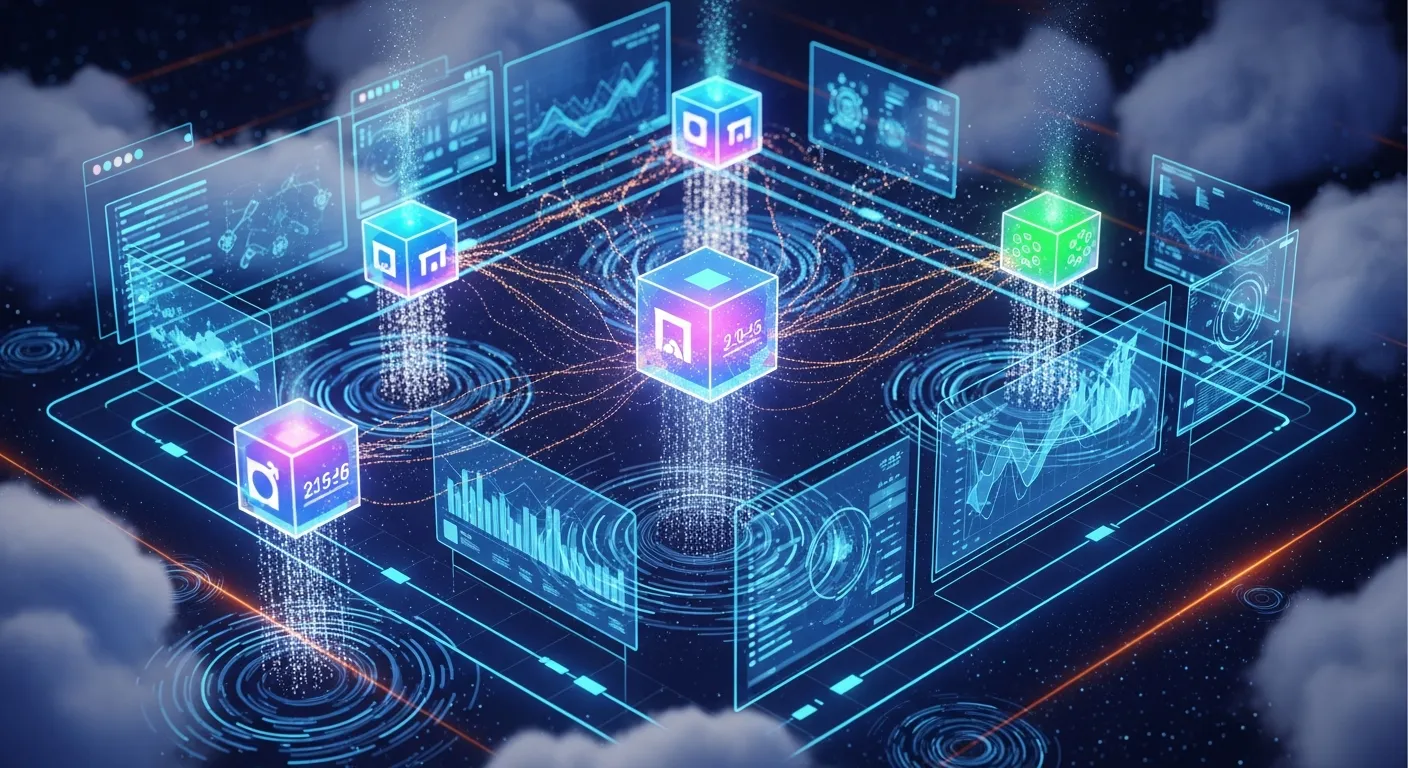
Modern serverless platforms in 2026 combine a distributed function runtime, an event-driven mesh, and a stateful edge layer. Functions run in lightweight containers that launch in milliseconds, while an intelligent scheduler routes requests to the nearest edge node. A unified observability plane provides real‑time metrics and tracing across the entire stack.
Key Components
- Function as a Service runtime
- Event bus and message broker
- Stateful edge data store
- Unified observability layer
- Security orchestrator
- Developer portal with CI/CD integration
How It Works
When a request arrives, the API gateway validates the payload and forwards it to the event bus. The scheduler evaluates current load and selects an optimal edge node. The FaaS runtime spins up a micro‑VM or sandbox, loads the function code, and executes it. Results are streamed back through the gateway while logs and metrics are emitted to the observability layer. Billing is calculated per millisecond of execution and per GB of memory used.
Use Cases
- Real‑time image and video processing at the edge for AR applications
- Scalable API backends for mobile and IoT devices with unpredictable traffic spikes
Advantages
- Zero provisioning reduces time to market
- Automatic fine‑grained scaling eliminates over‑provisioning
- Pay‑as‑you‑go pricing aligns costs with actual usage
- Built‑in resiliency and multi‑region failover
- Integrated observability simplifies debugging and performance tuning
Limitations
- Cold start latency for rarely used functions despite optimizations
- Limited control over low‑level networking and custom kernels
- Vendor lock‑in risk as proprietary APIs evolve
Comparison
Compared to container orchestration platforms like Kubernetes, serverless removes the need for pod definitions, service meshes, and manual scaling policies. Unlike traditional VMs, it offers sub‑second startup and per‑invocation billing, but sacrifices the ability to run long‑running processes or custom OS configurations.
Performance Considerations
Performance now hinges on function cold start mitigation, edge proximity, and efficient event routing. Providers use pre‑warm pools and predictive scaling algorithms to keep latency under 20 ms for most workloads. Developers should design stateless functions, keep package sizes small, and leverage the edge data store for low‑latency state access.
Security Considerations
Security is enforced through a layered model: the security orchestrator applies zero‑trust policies, runtime isolation uses hardware‑based enclaves, and secret management integrates with cloud KMS. Auditing is continuous, and compliance reports are generated automatically for standards such as ISO27001 and SOC2.
Future Trends
Looking beyond 2026, serverless will converge with AI inference services, enabling on‑demand model execution at the edge. Multi‑cloud serverless abstractions are emerging, allowing workloads to span providers without code changes. Additionally, serverless will incorporate more stateful primitives, blurring the line between functions and microservices.
Conclusion
The evolution of serverless computing by 2026 demonstrates a mature, enterprise‑ready model that delivers speed, scalability, and cost efficiency. While challenges remain around cold starts and vendor dependence, the ecosystem’s rapid innovation and expanding feature set make serverless a cornerstone of modern cloud architecture.