Unlock Faster Releases with Cloud‑Native CI/CD Pipelines on AWS
Introduction
In today’s hyper‑competitive market, software teams need to ship features quickly without sacrificing quality. Cloud‑native continuous integration and continuous delivery (CI/CD) pipelines built on Amazon Web Services provide the agility, reliability, and cost efficiency required to meet these demands. This article explores the core concepts, architecture, and real‑world benefits of adopting cloud‑native CI/CD on AWS.
Core Concept
A cloud‑native CI/CD pipeline leverages managed services, containerization, and serverless compute to automate the entire software lifecycle from code commit to production deployment. By running entirely in the cloud, the pipeline eliminates the need for on‑premise build servers, reduces operational overhead, and scales automatically with workload demand.
Architecture Overview
A typical AWS‑based cloud‑native CI/CD architecture consists of source control (AWS CodeCommit or GitHub), build orchestration (AWS CodeBuild), artifact storage (Amazon S3 or CodeArtifact), pipeline orchestration (AWS CodePipeline), deployment targets (AWS Elastic Beanstalk, Amazon ECS, AWS Lambda, or Amazon EKS), and monitoring (Amazon CloudWatch and AWS X‑Ray). Each component is fully managed, allowing teams to focus on code rather than infrastructure.
Key Components
- AWS CodeCommit for version control
- AWS CodeBuild for scalable builds
- AWS CodePipeline for workflow automation
- Amazon S3 for artifact storage
- AWS CodeDeploy for automated deployments
- Amazon CloudWatch for monitoring and alerts
How It Works
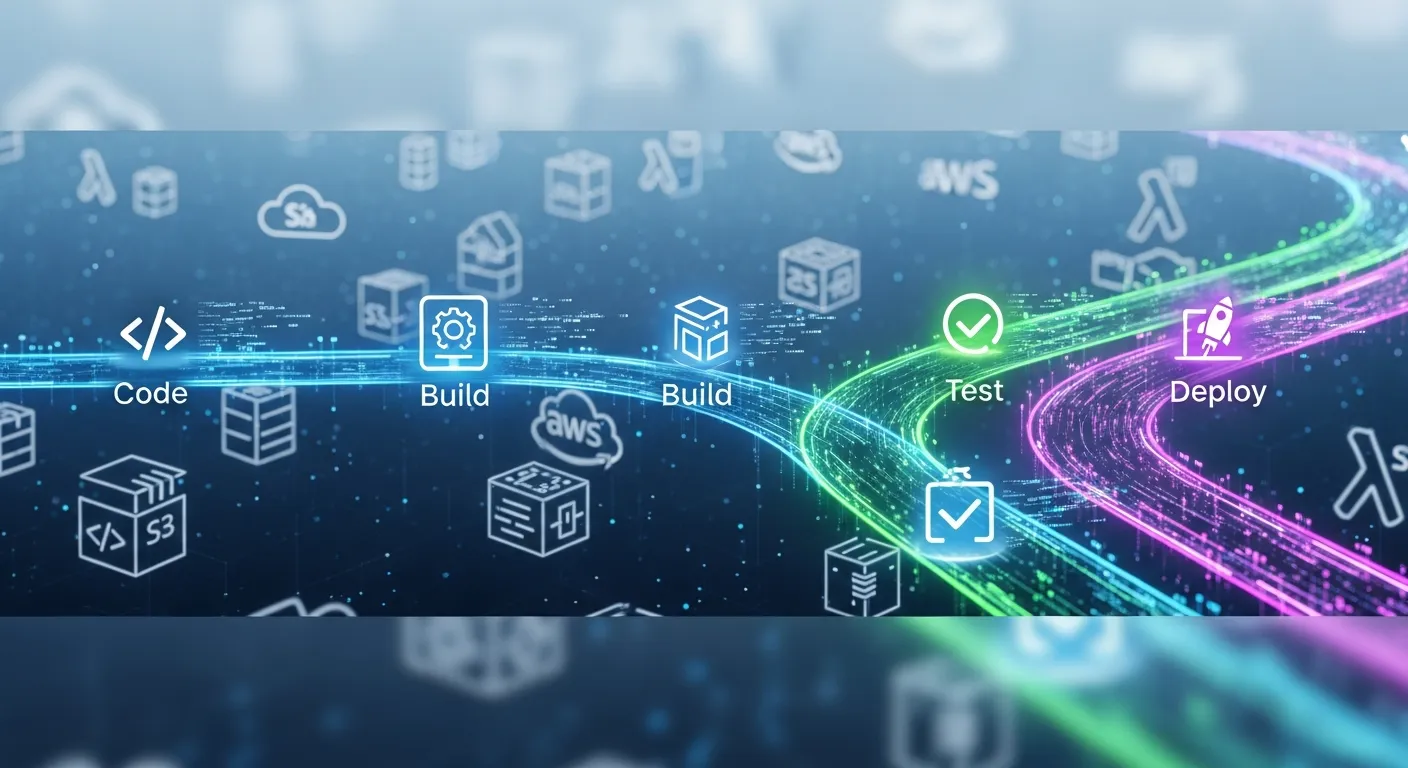
When a developer pushes code to the repository, CodePipeline detects the change and triggers a series of stages. First, CodeBuild compiles the source, runs unit tests, and produces build artifacts stored in S3. Next, optional security scans and integration tests are executed using additional CodeBuild projects or third‑party tools. Finally, CodeDeploy or a container orchestrator deploys the validated artifact to the chosen environment, while CloudWatch logs each step and notifies stakeholders of success or failure.
Use Cases
- Microservice deployment with Amazon ECS or EKS
- Serverless function updates using AWS Lambda
- Infrastructure as code pipelines with AWS CloudFormation
- Automated rollback and blue‑green deployments for high‑availability applications
Advantages
- Automatic scaling of build and test environments eliminates bottlenecks
- Pay‑as‑you‑go pricing reduces costs compared to fixed‑size build servers
- Built‑in security integrations such as IAM, Secrets Manager, and scanning tools
- Consistent, repeatable deployments improve reliability and reduce human error
Limitations
- Vendor lock‑in to AWS services can limit multi‑cloud strategies
- Complex pipelines may require custom Lambda functions or third‑party plugins
Comparison
Compared with traditional on‑premise CI/CD solutions, AWS managed services provide higher elasticity, lower maintenance effort, and tighter integration with other cloud resources. Open‑source tools like Jenkins can run on AWS but require additional operational work for scaling, patching, and security. Serverless alternatives such as GitHub Actions offer similar capabilities but lack native access to AWS‑specific resources without extra configuration.
Performance Considerations
Leverage CodeBuild compute types that match the workload to avoid over‑provisioning. Use caching mechanisms in S3 and CodeBuild to speed up dependency retrieval. Parallelize test suites across multiple build containers and enable incremental builds for large codebases to reduce cycle time.
Security Considerations
Implement least‑privilege IAM roles for each pipeline stage, store secrets in AWS Secrets Manager, and enable encryption at rest for S3 artifacts. Integrate static code analysis and container image scanning (Amazon ECR scanning) to catch vulnerabilities early. Enable audit logging with AWS CloudTrail for full traceability.
Future Trends
By 2026, AI‑driven pipeline optimization will suggest test prioritization, auto‑scale build resources based on predictive demand, and automatically generate infrastructure code from high‑level intents. Serverless CI/CD platforms will further reduce latency, and tighter integration with GitOps workflows will enable declarative, version‑controlled pipeline definitions across multi‑cloud environments.
Conclusion
Adopting cloud‑native CI/CD pipelines on AWS empowers development teams to deliver software faster, more securely, and at lower cost. By leveraging fully managed services, organizations can eliminate infrastructure headaches, scale on demand, and focus on building value for users. As the ecosystem evolves, embracing these pipelines will be a key differentiator for businesses seeking continuous innovation.