
Why Multi-Cloud Strategies Cut Vendor Lock-In Risks
Introduction
Enterprises are increasingly moving critical workloads to the public cloud, but relying on a single provider can create strategic and operational vulnerabilities. Multi‑cloud strategies spread workloads across two or more cloud platforms, offering a safety net that reduces the power any one vendor holds over an organization.
Core Concept
The core idea behind multi‑cloud is to treat each cloud service as a modular component that can be swapped, scaled, or retired without disrupting the overall system. By designing applications for portability and using abstraction layers, businesses keep their options open and avoid the costly migrations that come with lock‑in.
Architecture Overview
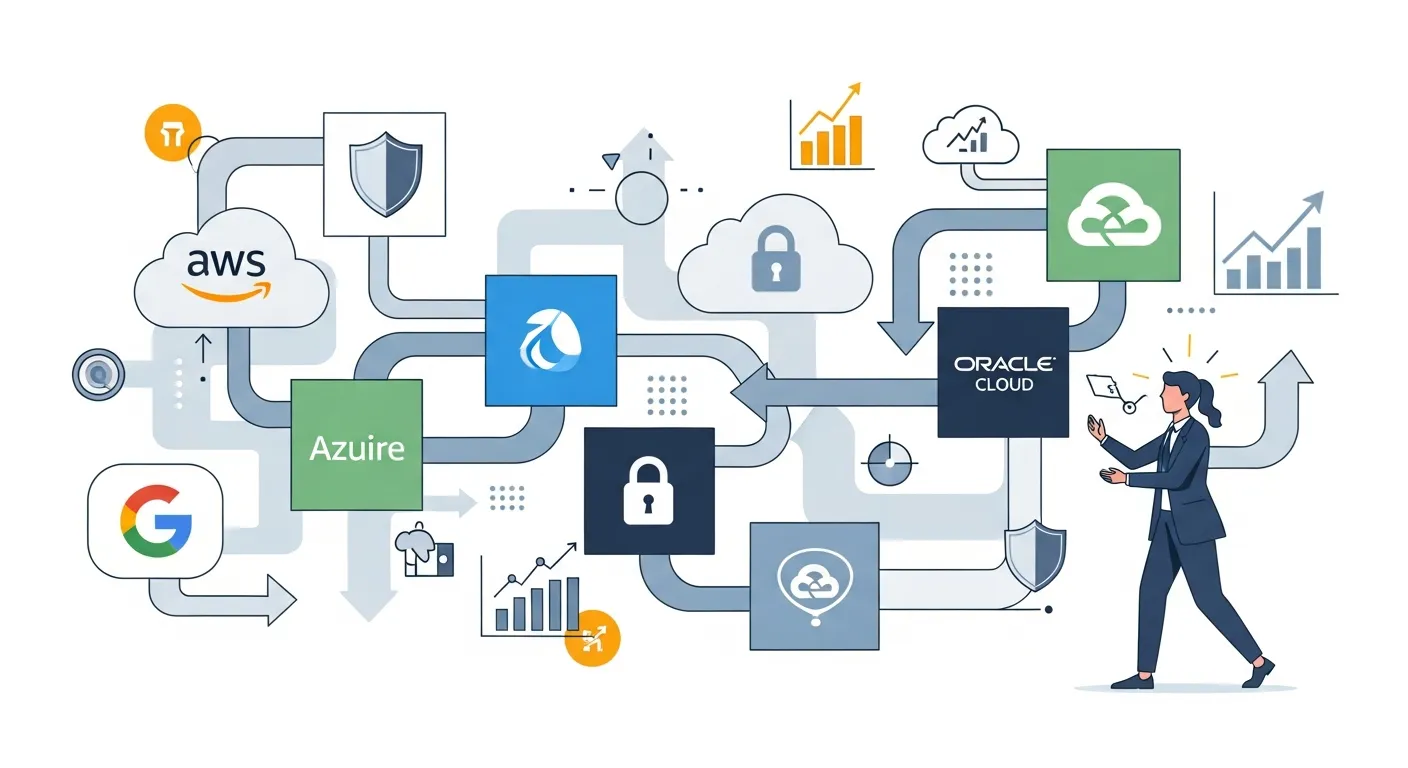
A typical multi‑cloud architecture consists of a common data layer, a set of container or serverless runtimes, and a unified management plane that orchestrates resources across providers. Traffic routing, identity federation, and monitoring are handled by cloud‑agnostic tools, while each provider supplies the underlying compute, storage, and networking services.
Key Components
- Unified API gateway
- Cross‑cloud identity and access management
- Data abstraction layer
- Container orchestration platform
- Infrastructure as code tooling
How It Works
Developers write code against standardized interfaces such as Kubernetes, Terraform, or the OpenAPI spec. The infrastructure definition is stored in version‑controlled files that reference provider‑specific modules. At deployment time, the orchestration engine selects the target cloud based on policy, cost, latency, or compliance requirements, provisioning resources automatically and updating DNS to route traffic to the optimal endpoint.
Use Cases
- Disaster recovery across geographic regions
- Performance optimization by selecting the lowest‑latency provider per user segment
- Regulatory compliance that mandates data residency in specific jurisdictions
- Cost arbitrage by shifting workloads to the provider with the best pricing for a given workload
Advantages
- Reduced dependency on a single vendor
- Improved resilience and uptime
- Greater bargaining power for pricing and service terms
- Flexibility to adopt best‑of‑breed services from each provider
Limitations
- Increased operational complexity and management overhead
- Potential data transfer costs between clouds
- Need for skilled staff familiar with multiple platforms
Comparison
Compared with a single‑cloud approach, multi‑cloud adds layers of abstraction that increase flexibility but also require more sophisticated tooling. Hybrid cloud, which combines on‑premises infrastructure with one public cloud, addresses data sovereignty but does not fully eliminate vendor lock‑in. Multi‑cloud is the most comprehensive strategy for organizations seeking true independence.
Performance Considerations
Latency can vary when services span multiple clouds, so workload placement algorithms must account for network distance and inter‑cloud bandwidth. Caching layers and CDN integration help mitigate performance gaps, while continuous performance testing ensures that SLAs are met across all providers.
Security Considerations
A unified security posture is essential. Centralized identity providers, consistent encryption policies, and cross‑cloud security monitoring tools help enforce uniform controls. Auditing must cover each provider's logging format and retention policies to maintain compliance.
Future Trends
By 2026, standards such as the Cloud Native Computing Foundation's Service Mesh Interface and open‑source federation frameworks will make multi‑cloud orchestration more seamless. AI‑driven workload placement engines will automatically shift resources in real time to optimize cost, performance, and risk, further diminishing the relevance of any single vendor.
Conclusion
Multi‑cloud strategies empower organizations to sidestep vendor lock‑in by building flexibility into the very fabric of their architecture. While the approach introduces complexity, the payoff in resilience, bargaining power, and strategic agility makes it a compelling choice for forward‑looking enterprises.