Why Prometheus and Grafana Remain Core to Modern Monitoring
Introduction
Monitoring is the nervous system of any reliable software platform. Over the past decade Prometheus and Grafana have become the de facto standard stack for collecting metrics and visualizing them, and their relevance shows no sign of fading.
Core Concept
At their core Prometheus provides a time series database and a powerful query language while Grafana turns those series into interactive dashboards and alerts.
Architecture Overview
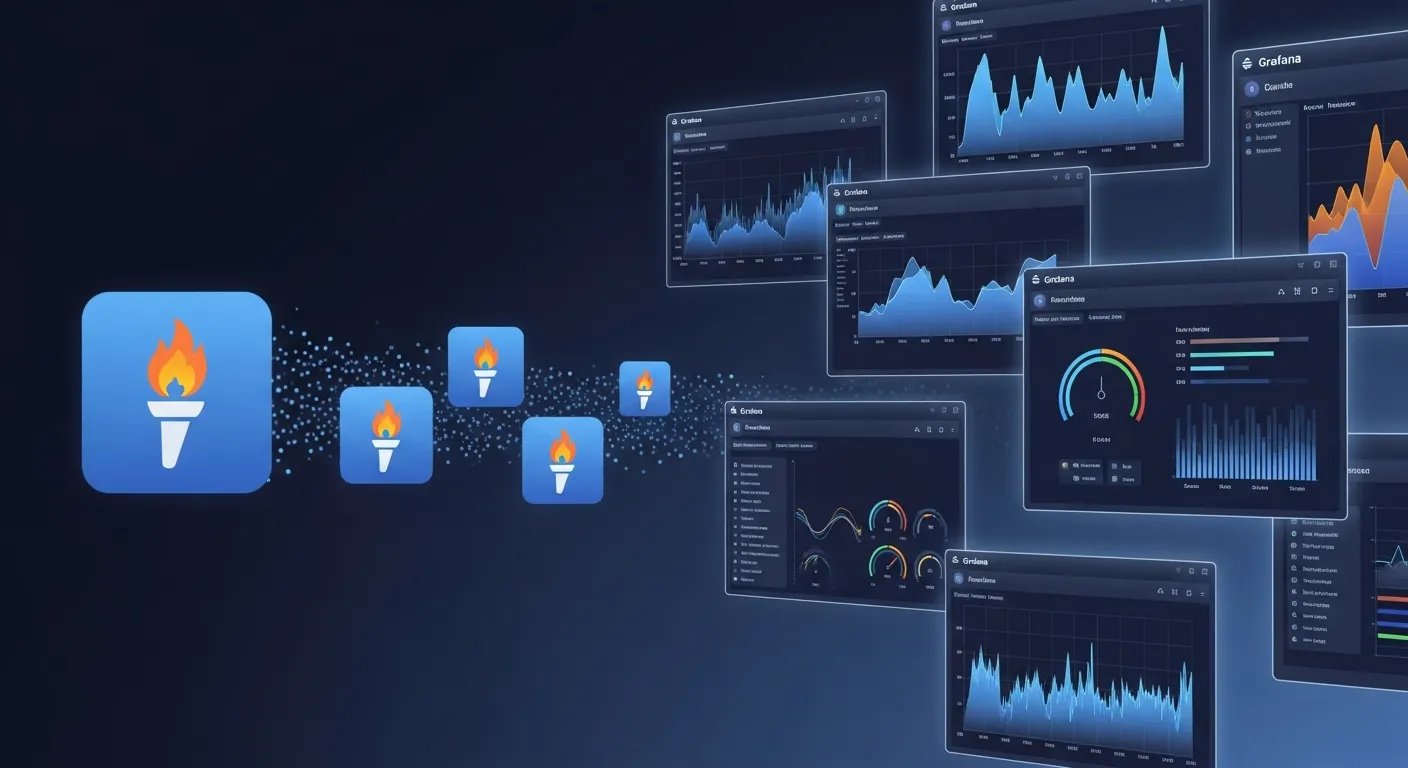
Prometheus scrapes metrics from HTTP endpoints, stores them locally, and optionally forwards data to remote storage. Grafana reads from Prometheus or other data sources, applies templating, and renders panels on a web UI.
Key Components
- Prometheus Server
- Alertmanager
- Grafana UI
- Exporters
- Remote Write/Read
How It Works
Prometheus periodically sends HTTP GET requests to each configured target. The target exposes metrics in a text based exposition format. Prometheus parses the response, timestamps each sample, and writes it to a highly compressed block file. Queries are executed using PromQL which can aggregate, filter and join series on the fly. Grafana connects to the Prometheus HTTP API, runs the same PromQL expressions, and displays the results in charts, tables or heatmaps that can be refreshed in real time.
Use Cases
- Kubernetes cluster health monitoring
- Microservice latency tracking
- Infrastructure capacity planning
Advantages
- Open source and vendor neutral with a large ecosystem
- High performance storage and flexible query language
Limitations
- Limited native support for distributed tracing
- Scaling large global deployments requires additional components
Comparison
Compared to proprietary APM tools the Prometheus-Grafana combo is open source, vendor neutral and highly extensible, but it lacks built-in distributed tracing and deep code level profiling that solutions like Datadog or New Relic provide.
Performance Considerations
Prometheus scales well for millions of series when sharding with federation or using Cortex/Thanos for long term storage. Careful tuning of scrape intervals, retention policies and query time ranges is essential to keep CPU and memory usage predictable.
Security Considerations
Both components support TLS for transport encryption and can be placed behind reverse proxies for authentication. Role based access control is native in Grafana while Prometheus relies on external proxies or service mesh policies for fine-grained control.
Future Trends
By 2026 the ecosystem is moving toward unified observability platforms that combine metrics, logs and traces. Prometheus will likely remain the metric engine of choice while Grafana expands native support for OpenTelemetry traces and AI-driven anomaly detection.
Conclusion
Prometheus and Grafana endure because they solve the core problems of metric collection and visualization with simplicity, performance and an open community. Their modular design lets organizations adopt them incrementally and integrate with emerging observability standards, ensuring they stay at the heart of monitoring strategies for years to come.